Seres Technologies offers comprehensive expertise in operational safety (OS) through a wide array of analyses and technical deliverables. Its services include the compiling of FMDS plans, functional analysis (AFE/AFI), preliminary risk analysis (PRA), as well as functional or component FMECA studies. The team also handles fault modelling using Fault Trees, by defining critical safety components (LPCS/LCCS), drafting a list of hazardous situations, RAMS requirements, and RMA/RAM safety files.
Seres Technologies
The Railway Industry
The railway sector is a key driver of sustainable mobility and public transport safety. Special attention is paid to it in terms of operational safety, maintenance and technological innovation. Backed by fifteen years of experience in highly-demanding sectors, Seres Technologies draws on its expertise to serve the railway industry to maintain the reliability, maintainability, service availability and safety of trains and their sub-assemblies (systems, equipment, etc.).
Challenges faced by the railway industry
The railway sector is facing challenges relating to rapid modernisation and safety concerns. In France, 130 billion passengers were transported in 2024, reflecting the scope of safety challenges. The emergence of new technologies such as hydrogen and batteries as well as the integration of smart systems requires the continual adaptation of standards and procedures to ensure the safety of passengers and the maintenance of infrastructure.
Seres Technologies supports stakeholders in the railway industry across the full project life cycle. The studies conducted by Seres Technologies allows us to demonstrate that railway architecture, systems and equipment are meeting safety objectives, in line with current standards.
Seres Technologies conducts advanced risk analyses and implements safety studies based on in-depth methods including PRAs, FMECAs, fault trees, etc. to identify potential weak points, model fault scenarios and determine suitable corrective measures (preventative maintenance).
Seres Technologies’ expertise makes it possible to mitigate incidents and optimise equipment availability. This approach is fundamental in supporting the transition towards decarbonised solutions including hydrogen trains, and ensuring that technological innovation in no way compromises the safety of railway operations.
The Seres Technologies expertise in the railway industry
Mechanical Design
Due to the emergence of new technologies and the integration of smart systems, the railway industry is facing ongoing upgrade challenges that also require adaptation to current regulatory requirements.
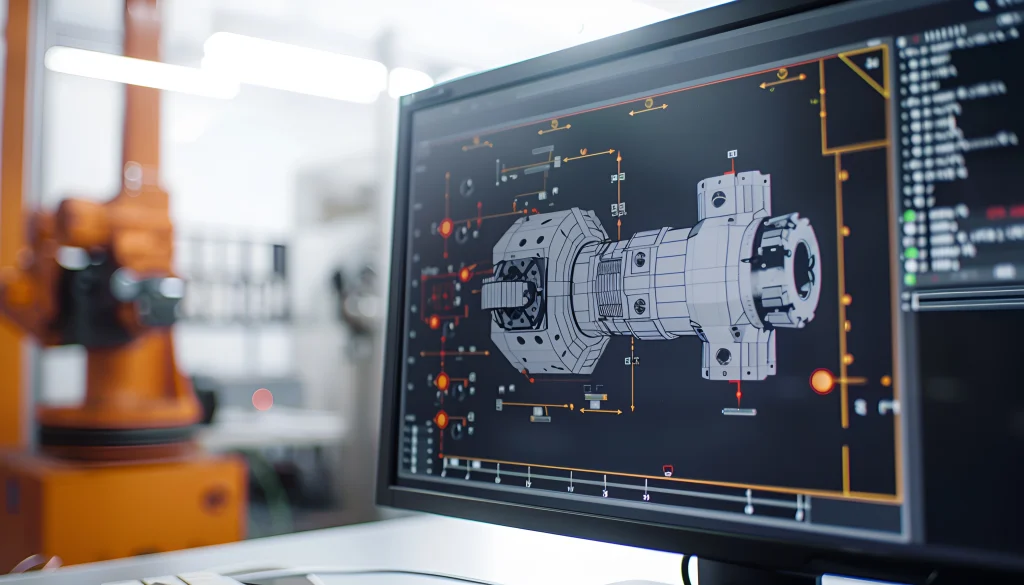
As part of this, Mekkatronix supports players in the railway industry to develop robust mechanical systems. Backed by expertise in engineering, calculations, simulations and validation according to Standard EN 50125, the teams help to design strong, reliable components for rolling stock.
R&D
Seres Technologies supports stakeholders in the railway industry with R&D services covering technical, digital, environmental and safety-related aspects; Development of new systems of propulsion, optimisation of the performance of trains, improvement of braking and suspension systems, the design of lighter rolling stock for better energy efficiency, predictive maintenance, the development of smart signalling systems, and training, among other aspects.
Human and Organisational Factors (HOFs) and Ergonomic Design
In the railway industry, human and organisational factors and ergonomics are vital to ensure the safety, reliability and performance of networks. The ergonomic design of driving, maintenance and inspection posts allows us to reduce fatigue, human error and the risk of accidents, while improving agents’ comfort and level of vigilance. Taking these aspects into account lends itself not only to the safety of travellers and personnel, but also to service continuity and standards in the railway sector.
A key player in the management of industrial risks and complex system design, Seres Technologies offers advanced expertise in Human and Organisational Factors (HOFs) and Ergonomic Design, to players in the railway industry.
QHSERP
In the railway sector, QHSE is vital in ensuring passenger safety, the reliability of infrastructure and adherence to the applicable standards. The quality of materials and services ensures the longevity and performance of the network, while safety and security aim to prevent accidents and malicious acts. The management of technical and organisational risks allows us to anticipate failures and ensure service continuity.
An undisputed player in managing industrial risks and in complex system development, Seres Technologies offers advanced QHSE expertise to players in the railway industry.
Integrated Logistics Support (ILS)
Seres Technologies deploys Integrated Logistics Support (ILS) studies with a view to optimising the lifespan and performance of railway equipment. This routine approach covers the full systems’ life cycle, from design and acquisition to maintenance, use and decommissioning. Seres Technologies’ ILS method rests on detailed functional analyses, in-depth studies into reliability, maintainability and testability, as well as logistics support analyses specifically adapted to the railway industry. These tools allow for a reduction in operational costs, while offering maximum safety and uninterrupted equipment availability.
Expert Opinion
The regulatory standards and norms that Seres Technologies applies in the railway industry
- CENELEC 50126 (process), 50129 (equipment) and 50128 / 50657 (software)
- Order no. 2017-440 of 30 March 2017 concerning the safety of guided public city transport and application guides relating to the French Technical department in charge of safety for ropeways and guided transports (STRMTG)
- EN50155: Electronic equipment used on railway rolling stock
- EN 45545: Fire protection in railway cars
- EN50121: Electromagnetic compatibility of railway applications
- ISO 31000: Risk management
ILS Standards:
- SLI MIL-STD-1388-1A Standards: Logistics Support Analysis (LSA)
- MIL-STD-1388-2B: Logistics Support Analysis (LSA) File
- MIL-HDBK-502: Practical Standard for the development of the Logistics Support Analysis (LSA) process
- Def. Stan 00-600: Support capacity requirements for defence equipment
- ASD S3000L: Logistics Support Analysis (LSA) and Integrated Logistics Support (ILS) for complex systems
- S1000D: International specification for technical publications
- CEI 60300: Operational safety management
Maintenance standards:
- EN 13306: Maintenance – Terms and definitions
- NF X 60-000: Maintenance – General directives for the maintenance of industrial equipment
- EN 15380: Maintenance of railway infrastructure
Do you have a project?
Our teams are here to listen, address your needs, and support you from design through to completion.
Example of a project carried out by Seres Technologies in the railway sector
Logistics support for tramway maintenance
Seres Technologies recently provided its logistics support to a leading operator in the railway domain. Its task involved creating logistics tree structures to maintain tramways in service, optimising preventative and corrective maintenance policies. As part of the project, Seres Technologies implemented strategies to make it possible to extend the lifespan of equipment, while controlling operating costs. By improving branch availability and reducing downtime, the primary objective was to ensure service continuity and passenger safety, while realising significant savings for the operator.
Fault analysis
One of the major global constructors in the urban and railway transport domain called on Seres Technologies to identify the challenges related to risk control and system faults. Within the framework of the design of critical systems for trains, metros and tramways, Seres Technologies conducted preliminary risk analyses (PRAs) and FMECAs. These analyses allowed the modelling of critical scenarios such as the untimely opening of doors en route. By identifying and modelling these risks, the aim was to provide optimal security to passengers and avoid any incident related to the potential faults that arise with embedded systems.
Unlock your potential at Seres Technologies
Joining Seres Technologies means you’ll be joining an international company that operates on a human scale, where a positive, collaborative-focused culture fosters a stimulating working environment. Thanks to the diversity of our projects across a wide range of sectors, each employee has the opportunity to take on ambitious technological and human challenges, developing their skills and contributing to major innovations.
Join our team
Would you like to join our team ? Please send us your resume :
FAQs
What role does the FMECA play in optimising railway safety?
FMECA (Failure Modes, Effects and Criticality Analysis) allows us to identify simple system faults and evaluate their impact on safety. Seres Technologies uses this method to consolidate the robustness of systems, while reducing the likelihood of incidents occurring.
How does the integration of hydrogen technologies affect safety in the railway sector?
The integration of hydrogen technologies such as hydrogen trains improves carbon footprint, but poses challenges in terms of safety, particularly concerning storage. Seres Technologies ensures secure management owing to risk analyses and ensuring compliance with the applicable standards, thereby contributing to the safety of travellers and users.
What predictive maintenance solutions are available for railway cars?
Predictive maintenance relies on smart sensors and analysis systems to monitor the critical components in real time. Seres Technologies recommends the application of detection measures to reduce, in particular, downtime and to optimise train availability.